
Understanding your vehicle’s performance starts with a simple fuel efficiency calculation. By tracking the distance you drive against the amount of gas your tank consumes, you gain valuable insight into your car’s health.
Using a standard mpg formula allows you to see exactly where your money goes at the pump. A higher result generally means your engine runs more efficiently, requiring less energy for every mile traveled.
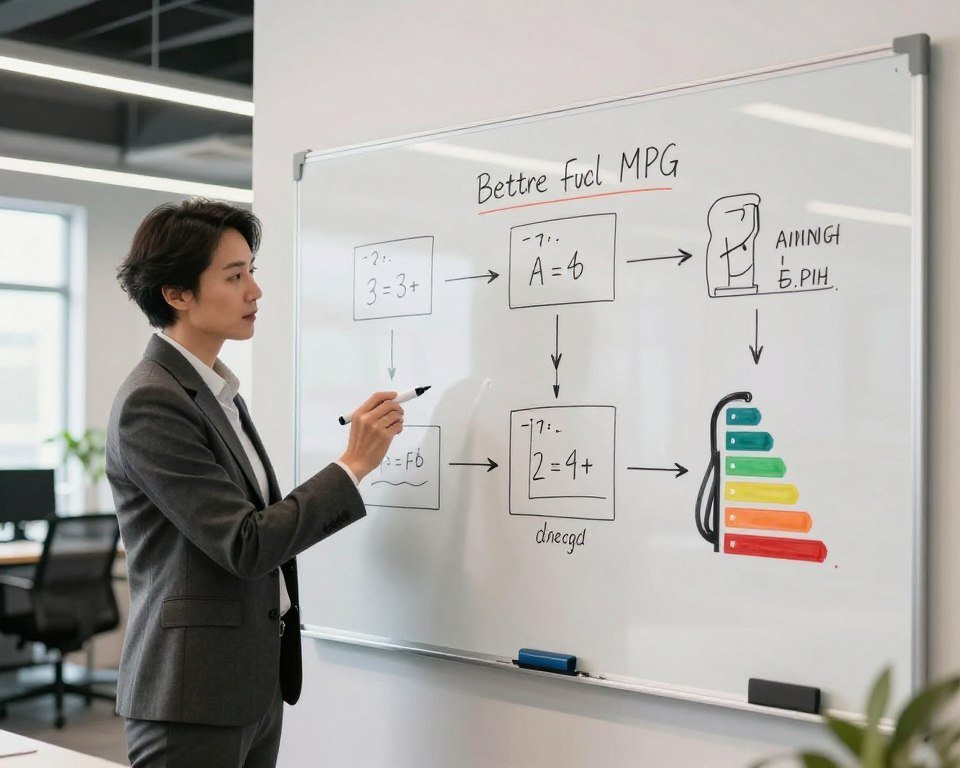
Mastering the process of calculating gas mileage empowers you to make smarter driving choices. When you know your current baseline, you can take specific actions to improve fuel economy over time. Learning how to calculate mpg is a practical skill that saves you money and helps the environment.
Key Takeaways
- Tracking fuel usage helps identify potential engine issues early.
- Higher numbers indicate better vehicle performance and lower costs.
- Consistent monitoring encourages more efficient driving habits.
- Simple math provides a clear picture of your daily travel expenses.
- Small adjustments to your routine can lead to significant long-term savings.
How to Calculate MPG: Gather Accurate Fuel and Mileage Data
To master your vehicle’s performance, you need to collect precise data during your next trip to the pump. A reliable mpg calculation method relies on consistency and attention to detail. By following a structured approach, you can gain valuable insights into how your car consumes fuel under real-world driving conditions.
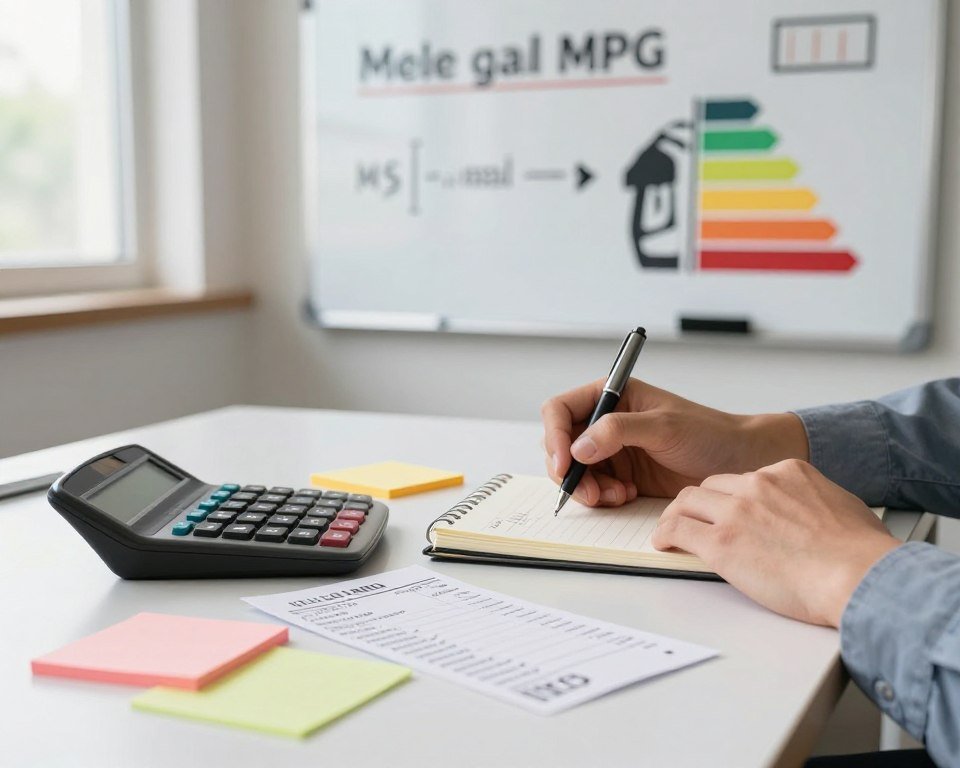
Record the Starting Odometer Reading and Fill the Tank Completely
The first step to calculating miles per gallon is to start with a clean slate. When you arrive at the gas station, fill your tank until the nozzle clicks off automatically. Do not try to “top off” the tank, as this can lead to inconsistent results.
Once the tank is full, write down your current odometer reading. This number serves as your baseline for the mpg calculation. Keeping this record in a small notebook or a smartphone app ensures you have the data ready for your next stop.
Track Miles Driven Before the Next Fill-Up
Drive your vehicle as you normally would until you need to refuel again. You do not need to run the tank completely dry, but it is best to wait until you have used at least half a tank. This helps improve the accuracy of your gas mileage calculation formula by providing a larger sample size of data.
- Keep track of your daily commute or long-distance trips.
- Avoid resetting your trip odometer if you prefer to use the main odometer reading.
- Note any unusual driving conditions, such as heavy traffic or steep hills.
Measure the Gallons Used at the Following Fill-Up
When you return to the gas station, fill your tank to the same level as before. The amount of fuel required to reach that full point is the exact volume of gas you consumed during your trip. This specific measurement is the final piece of the puzzle needed to determine your efficiency.
Keep Units Consistent for U.S. Miles-per-Gallon Calculations
To ensure your fuel efficiency formula works correctly, you must use compatible units. In the United States, this means measuring distance in miles and fuel volume in U.S. gallons. If you mix units, such as liters or kilometers, your final result will be inaccurate. Always verify that your pump display is set to gallons before you begin your calculation.
Apply the MPG Formula and Check Your Fuel Efficiency Calculation
Turning your raw fuel data into actionable insights is easier than you might think. Once you have gathered your numbers, you can determine exactly how efficiently your vehicle is performing on the road.
Use the Miles-per-Gallon Calculation Equation
Calculate Miles per Gallon with Miles Driven ÷ Gallons Used
The standard mpg calculation equation is simple to perform. You just need to divide the total miles you have driven by the number of gallons of fuel required to refill your tank.
For example, if you drove 360 miles and it took 12 gallons to fill your tank back to the top, your result is 30 MPG. This straightforward math provides a clear snapshot of your current fuel economy.
Work Through a Realistic Gas Mileage Calculation Example
Round the Result Without Losing Useful Accuracy
When you use a gas mileage calculator, you might get a long string of decimal points. It is usually best to round your final figure to the nearest tenth, such as 28.4 MPG.
This level of precision is perfectly adequate for tracking your vehicle’s performance over time. Keeping one decimal place ensures you can spot small changes in efficiency without getting bogged down in unnecessary numbers.
Compare Your Manual Result with a Car MPG Calculator
Understand Why Dashboard MPG Readings May Differ
You may notice that your manual calculation differs from the digital display in your vehicle. A car mpg calculator built into your dashboard often relies on sensor estimates rather than exact fuel pump measurements.
Factors like idling time, fuel pump sensitivity, and even the slope of the gas station pavement can cause these variations. Your manual calculation remains the gold standard for accuracy.
Convert MPG for Fuel Consumption and Vehicle Comparisons
Compare City, Highway, and Combined Fuel Economy Ratings
Performing an mpg conversion allows you to compare your real-world results against the manufacturer’s estimates. You can use a fuel efficiency calculator to see how your driving habits stack up against official ratings.
Remember that city driving often yields lower numbers than highway travel due to frequent stops. Comparing these categories helps you understand if your vehicle is performing as expected under different conditions.
Conclusion
Tracking your vehicle performance starts with the simple mpg calculation formula. You only need accurate distance and fuel data to see how your car performs on the road. This basic math provides a clear picture of your driving habits.
A digital MPG calculator offers a fast way to track your progress over time. You might prefer a fuel economy calculator to manage data for multiple vehicles in your household. These tools simplify the fuel consumption calculation process for busy drivers.
Manual checks remain a reliable way to verify your digital results. You gain a better understanding of your engine’s health by performing these quick assessments yourself. Consistent monitoring helps you spot changes in performance before they become expensive repairs.
Small adjustments to your daily routine can help you increase your car’s gas mileage significantly. Smooth acceleration and proper tire inflation make a noticeable difference in your fuel budget. Reducing unnecessary idling keeps your engine efficient and saves money at the pump.
Start tracking your mileage today to take control of your travel costs. Share your results with friends or family to encourage better driving habits. Your commitment to efficiency leads to a smoother ride and a healthier wallet.
FAQ
What is the simplest way to learn how to calculate mpg for my vehicle?
The most reliable mpg calculation method is to fill your tank completely at a station like Shell or Chevron and record your odometer reading. After driving until you need more fuel, refill the tank and note the gallons used. To calculate miles per gallon, simply divide the total miles driven by the number of gallons it took to refill the tank. This basic mpg formula gives you a clear picture of your vehicle’s performance.
How does the mpg calculation formula work in a real-world scenario?
Imagine you are driving a Toyota Camry. If you traveled 360 miles and your second fill-up required 12 gallons of fuel, your mpg calculation equation would be 360 divided by 12, resulting in 30 MPG. Using this gas mileage calculation formula consistently helps you track how your car handles different driving conditions, such as heavy city traffic versus open highway cruising.
Why does my manual fuel efficiency calculation differ from my car’s dashboard display?
While a built-in car mpg calculator is convenient, it often relies on sensor estimates and software algorithms that may round data differently. A manual fuel consumption calculation based on actual pump receipts and trip meters is often more precise. If you notice a large discrepancy in a vehicle like a Ford F-150, it might be time to check your tire pressure or air filters to improve fuel economy.
Can I use an online fuel economy calculator to track my data?
Absolutely! Using a digital mpg calculator or fuel efficiency calculator can save you time. You just need to input your miles and gallons, and the tool will handle the mpg calculation for you. This is a great way to keep a digital log of your gas mileage calculations over several months to see long-term trends.
What steps can I take to increase my car’s gas mileage after I find my results?
Once you have used the fuel efficiency formula to establish a baseline, you can increase your car’s gas mileage by adopting smoother acceleration habits and reducing unnecessary idling. Keeping your car maintained with high-quality Michelin tires and regular oil changes at Jiffy Lube will also ensure your fuel efficiency stays as high as possible.
Is there a specific mpg conversion I should know for international travel?
If you are driving a Honda Civic across the border, you might encounter liters and kilometers instead of gallons and miles. To maintain an accurate mpg conversion, ensure you are converting liters to U.S. gallons (about 3.78 liters per gallon) before applying your gas mileage calculator logic, as keeping units consistent is vital for an accurate result.